Why Chemical Industry Pallets Cannot Be an Afterthought
Talk to a logistics engineer at any Jubail petrochemical plant and they will tell you the same thing, the pallet failure that caused the incident was almost never a surprise in hindsight. The wrong deck spacing let a drum shift. The wrong load rating let an IBC base compress the block. A standard warehouse pallet used in a chemical environment absorbed the spill instead of showing it.
CP classification exists precisely because general-purpose pallets were not designed for these loads. Each grade in the CP1 through CP9 matrix covers a defined cargo type. Deck geometry, block dimensions, entry configuration, and load rating are all specified per grade. Substituting grades, or using non-CP pallets altogether, creates a handling problem. It also creates a compliance issue at SABIC, Royal Commission, and Aramco contractor facilities. Non-compliant packaging gets rejected at the gate.
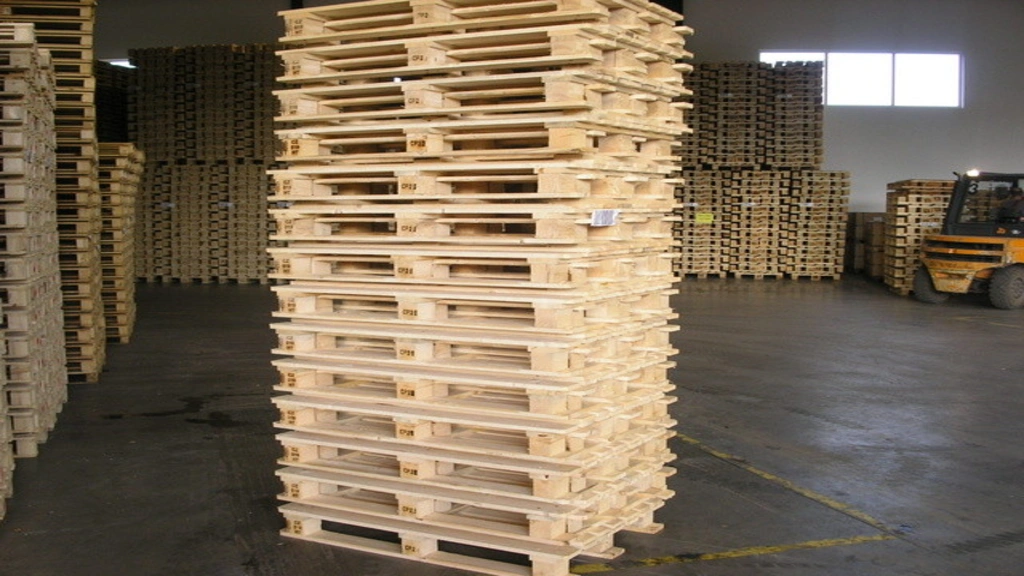
KSA Boxes manufactures chemical industry wooden pallets across the full CP matrix from our Dammam facility. We stock all nine grades and supply Khobar, Jubail, Riyadh, Yanbu & KAEC. Every pallet ships kiln-dried, ISPM 15 heat-treated, and fully documented, HT stamp, IPPC mark, and certificate of treatment with each delivery.
The CP Pallet Matrix: CP1 to CP9
Picking the wrong CP grade is a procurement error that shows up at the worst time, during loading, at the facility gate, or after a pallet failure mid-transit. Here is how the grades map to the cargo types moving through KSA’s petrochemical supply chain.
CP1 and CP3 Drums, Sacks, and Bulk Bags
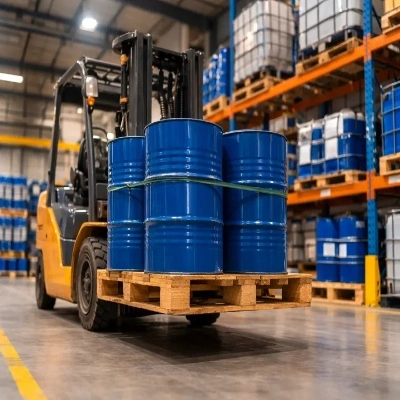
CP1 is built for cylindrical drum cargo. The open deck board configuration is not decorative; it lets a floor supervisor spot a leak from below without touching the load. That matters in Jubail’s chemical handling areas where a visual spill check is part of the standard loading protocol. Dimensions run 1,200 × 1,000mm with four-way entry. Counterbalanced forklifts running most Jubail and Yanbu plant corridors engage from any approach angle.
CP3 handles bulk bags and sack cargo, fertilizer, polymer granules, and chemical powders. The deck board spacing on CP3 is wider than a standard pallet, and that’s intentional. A 1,000kg bulk bag sitting on tightly spaced boards concentrates pressure on the contact points. CP3 deck geometry spreads that load across the full base of the bag, which is what keeps the base from deforming mid-transit.
Both grades use the wing pallet design, the deck overhangs the block structure on both sides. Overhead crane and spreader bar operations hook under the overhang directly. In Jubail logistics bays where forklift clearance is tight, that hoisting option is not a convenience feature. It’s the only safe way to move the load.
CP9, IBC Containers and Heavy Hazardous Material
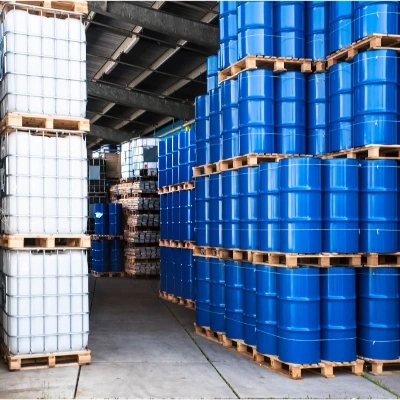
CP9 carries the hardest loads in the CP range. A 1,000-litre IBC tank at full capacity runs between 1,200 and 1,500kg. The CP9 block and deck construction handles that static weight cleanly. Lighter-grade pallets under the same load compress or split. CP9 does not.
Unlike the open-deck CP grades, CP9 uses a closed board configuration. Spill containment on IBC loads sits at the container level, so the deck on CP9 prioritises rigidity over drainage visibility. Four-way entry keeps the pallet compatible with both counterbalanced forklifts and manual pallet jacks. In confined plant environments, you cannot always choose your equipment, so that flexibility matters.
We produce CP9 to exact footprint compatibility with standard IBC tank base dimensions. The tank base sits flush. Banding points line up with the container’s anchor lugs. The whole assembly moves as a stable unit through the logistics chain.
CP2, CP4, CP5, CP6, CP7, and CP8, Intermediate Grades
The intermediate grades cover the cargo types that fall between standard drums and full-size IBCs. CP5 and CP6 address conical and tapered drum profiles, the kind that tip on a flat deck because the contact geometry is wrong. CP7 and CP8 cover square-footprint IBC formats and higher-volume containers that do not fit CP9 base dimensions.
We supply every intermediate grade to order. Send your cargo type, container dimensions, and volume at the RFQ stage. We confirm the correct grade, deck configuration, and lead time before production starts.
Automated Racking Compatibility and Load Distribution
Automated racking systems in Jubail and Yanbu petrochemical plants run to tight tolerances. A pallet 5mm over the specified width jams the conveyor infeed. One running short on block height misses the racking arm. Either scenario stops the line, and in a chemical plant, an unplanned line stop is not a minor event.
Why Kiln-Drying Matters for Dimensional Consistency
We hold all CP pallet production to ±2mm tolerance across the full batch. Getting there is not just a machining question, it’s a timber question. Green or undried wood moves after the pallet leaves production. It swells under humidity. It shrinks through the heat cycles that Saudi industrial facilities run year-round. A pallet that measured correctly at delivery can be out of spec three weeks later. Sitting in a Yanbu plant racking system, it jams or gets pulled by QC.
Kiln-dried stock processed to below 19% moisture content holds its dimensions through those conditions. Your automated racking system does not jam. Your QC team does not pull pallets from a batch because they stopped fitting the system. That stability predictable, batch-to-batch, is what the kiln-drying process is actually delivering.
European Standard Compliance for Export Shipments
KSA-based petrochemical exporters shipping to EU distribution networks need CP pallets built to the full European chemical pallet standard, not domestic approximations of it. Dimensional tolerances, load ratings, material specifications, and deck geometry must match the standard exactly. Pallets outside those parameters get flagged at EU port inspections. The resulting delays and replacement costs land on the exporter’s account.
We produce to the full European standard chemical pallets specification. Our pallets clear EU port inspections without dimensional queries. ISPM 15 heat treatment and IPPC certification cover every export-bound production run. Your freight forwarder gets everything needed for customs clearance without having to chase documentation after dispatch.