Industrial Wooden Crates & Open Slatted Framing in Saudi Arabia
ISPM-15 Certified · Heavy Duty Structural Bases · Airflow Optimized Protection for Heavy Industrial Cargo
Shipping heavy equipment is always a balance between protection and practicality. Overbuilding the packaging adds cost and weight. Underbuilding it risks damage. Our wooden crates are designed around that middle ground, strong enough for industrial handling, but not wasteful in material or design.
We build open slatted wooden crates for machinery and industrial cargo across Saudi Arabia. From high-capacity industrial hubs like Dammam, Jubail, and Khobar in the Eastern Province, to major distribution networks in Riyadh and maritime logistics corridors in KAEC and Yanbu, each crate is made to match the actual load. We build around your specific cargo weight and transport realities, because in real transport conditions, nothing is standard.
Industrial Wooden Crate Types We Manufacture
KSA Boxes manufactures all major wooden crate types used across Saudi Arabia’s industrial supply chain
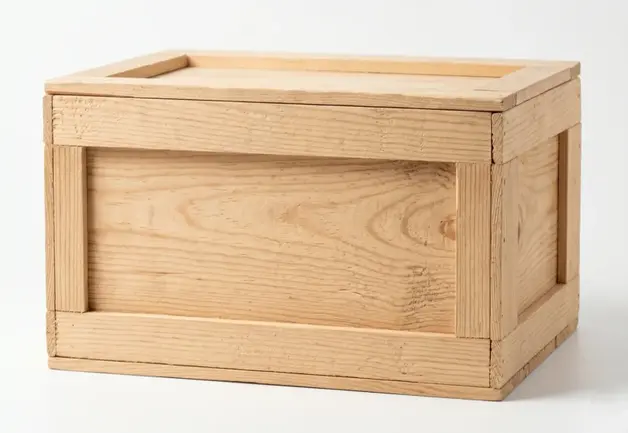
Open-Frame Wooden Crates:
Designed for maximum structural strength with minimum weight, providing full forklift access for pumps and compressors in Jubail’s petrochemical sector.
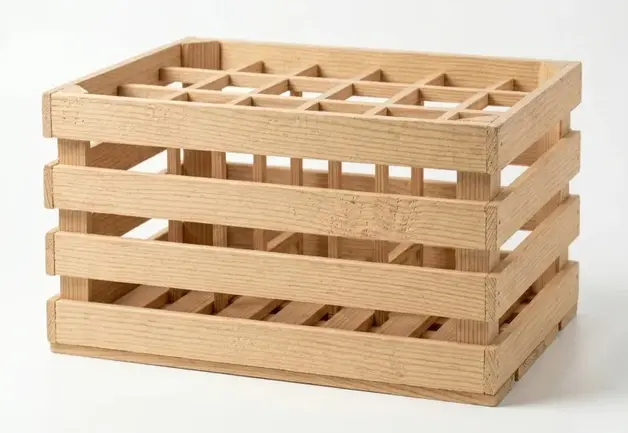
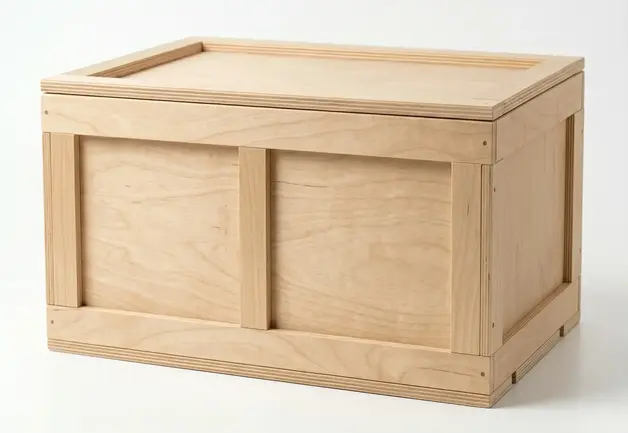
Closed Wooden Crates
Fully enclosed timber structures offering total protection from dust and moisture for sensitive instrumentation. If you need a lighter fully-enclosed option, explore our custom wooden boxes.
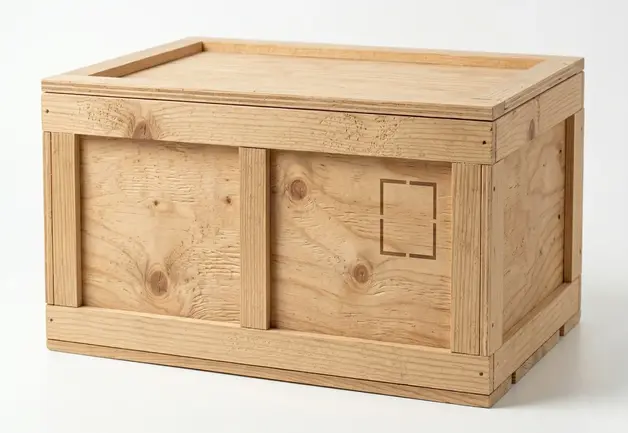
Sheathed Plywood Crates
Combines the integrity of a timber frame with smooth plywood panels, ideal for pharmaceutical exports.
Skidded Crates and Machine Bases
Heavy timber bases engineered for generators and oilfield equipment. For standard unit loads, view our industrial wooden pallets.
High-Strength Open Protection
Open slatted crates are often chosen for one simple reason: they do the job without unnecessary material.
In many export situations, cargo needs to be inspected at ports. With a closed box, that usually means opening panels or breaking seals. With a slatted design, inspection is straightforward. That alone saves time and avoids damage caused during re-packaging.
There’s also the issue of moisture. Fully enclosed timber crates can trap humidity, especially during long storage or coastal transit. That becomes a problem for metal equipment and machined surfaces. Open framing avoids that by allowing continuous airflow.
Weight is another practical factor. Less timber means lower shipping mass, but the structure still needs to carry real loads. That’s why the strength is concentrated in the base system and load-bearing members, not unnecessary outer covering.
Heavy Machinery Skids & Transport Bases
Everything starts at the bottom.
Before side walls are even added, the skid is built first because it carries the full weight of the load. If that part is wrong, the crate fails regardless of how strong the framing is.
We use thick hardwood runners, cross bracing, and properly placed lifting points for forklifts and cranes. The positioning isn’t random, it follows how the load actually behaves when lifted or moved.
These skids are used for transformers, turbines, compressors, industrial pumps, and other multi-ton equipment that requires stable lifting and transport from factory to site.
Core Manufacturing Tiers
Procurement-Grade New Crates
These are built from fresh kiln-dried timber, typically hardwood or SPF depending on the application. Nothing recycled, nothing reused. They are made when the shipment value or handling risk justifies a fully new build. Most of these go into oil & gas equipment, energy sector components, heavy pumps, and machinery that cannot afford instability during transport. Each crate is built around the exact dimensions and lifting points of the cargo.
Grade-A Reconditioned Crates
Reconditioned crates are not “used and sent out again” without work. They are stripped, inspected, and rebuilt where needed. Any weak joints are replaced. Any damaged timber is removed. Steel fasteners are added where structural reinforcement is necessary. This option is commonly used for repeat industrial shipments. Where the cargo type is known and consistent, and where companies want to reduce packaging cost without compromising safety.
Recycled and Remanufactured Crates
Some logistics systems run in cycles. In that case packaging is continuously reused internally. For that, we rebuild crates from recovered timber that still passes structural checks. Every piece is evaluated before reuse. If it holds load, it stays in circulation. If not, it’s removed. These crates are typically used for warehouse transfers. These are also used in internal factory logistics, and non-export movements. There efficiency matters more than appearance.
Technical Material Engineering & Load Matrix
Crate Type | Timber Selection | Base Structure | Use Case |
Heavy Open Slatted | Kiln-dried hardwood | 4-point lifting skid | Heavy freight, long-distance transport |
Standard Ventilated | SPF softwood | Steel-fastened runners | Warehousing, port handling |
Lightweight Cage | Plywood composite | Reinforced skid base | Air freight, modular parts |
Certified Heat Treatment & Export Compliance
- For international shipments, it is important for wood packaging that it must meet ISPM-15 requirements before it can be accepted by customs.
- We treat all export grade timber in controlled kiln cycles. This is done until the core reaches 56°C for a minimum of 30 minutes. After the material receives the IPPC mark required for international clearance.
- This step is what allows crates to pass through export checkpoints in Saudi ports without delays related to phytosanitary inspection.
Custom Crate Engineering RFQ
To prepare a quotation, we need:
- Crate type (slatted / skid / cage)
- Timber preference (hardwood / SPF / mixed)
- Internal dimensions (L × W × H)
- Estimated weight of cargo
- Export requirement (yes / no)
After getting clarity on these points, we design the crate around the handling reality, not just the size of the equipment.
Request Export-Ready Certified Crating Pricing
Need wooden crates manufactured to your exact specification?
Share your cargo dimensions, weight, and destination. Our team will design the right crate and return a quote within one business day.
احصل على عرض سعر مجاني لأقفاصك الخشبية المخصصة — نرد خلال يوم عمل واحد
Technical Crating FAQs
Slatted crates are used when visibility, airflow, and reduced weight are important. Enclosed boxes are used in a case where full environmental protection is required. Most heavy machinery does not need full enclosure unless it is highly sensitive.
By designing the load path correctly. The skid takes the weight first, then the frame supports stability. If the base is engineered properly, the rest of the structure simply maintains alignment.
Yes. This is only possible if they meet ISPM-15 requirements after inspection and heat treatment. Structural condition matters and these conditions play an important role in this and also matters more than whether the crate is new or previously used.