Industrial Wooden Packaging & Export Crating in Al Khobar
ISPM-15 Certified Timber · Aramco 8020-00 Structural Compliance · Gateway Logistics for the King Fahd Causeway & GCC Transit
What Keeps Industrial Shipments Moving Smoothly Through Khobar
Khobar is a major coordination point for industrial activity (mainly across the Eastern Province). A large portion of shipments handled here are tied to projects in Dammam, Jubail, offshore sites, and GCC distribution routes moving through Bahrain.
The key challenge in this flow is consistency at many checkpoints. When packaging details don’t match requirements (whether that’s ISPM-15 marking, documentation, or even basic structural specs) cargo tends to get held up for inspection. And in project-driven supply chains, even a short delay can affect multiple linked deliveries.
What matters in practice is preparation. Packaging has to be aligned with export expectations before it leaves the yard. Once it reaches customs or at the border, there should be no ambiguity in all aspects. These can be treatment, structure, and compliance.
Integrated Product Portfolio
Industrial Wooden Pallets
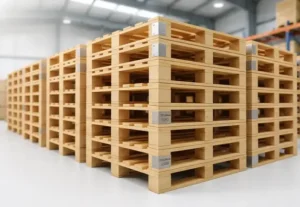
Euro and ISO pallet formats built from kiln-dried timber with moisture levels kept under control (below 19%). These are used in warehouse and distribution environments. Pallets are used where speed, stacking consistency, and repeat handling are integral and basic part of daily operations.

Industrial Wooden Boxes
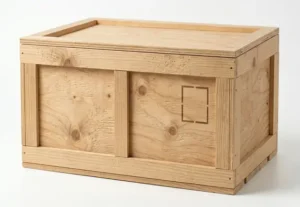
KSA Boxes Pallets are fully enclosed wooden boxes. These are commonly used when cargo needs complete protection from the different elements like dust and environmental exposure & common for sensitive equipment and electrical components. These are also used for high value industrial parts that cannot be left open during transport.

Heavy Machinery Wooden Crating
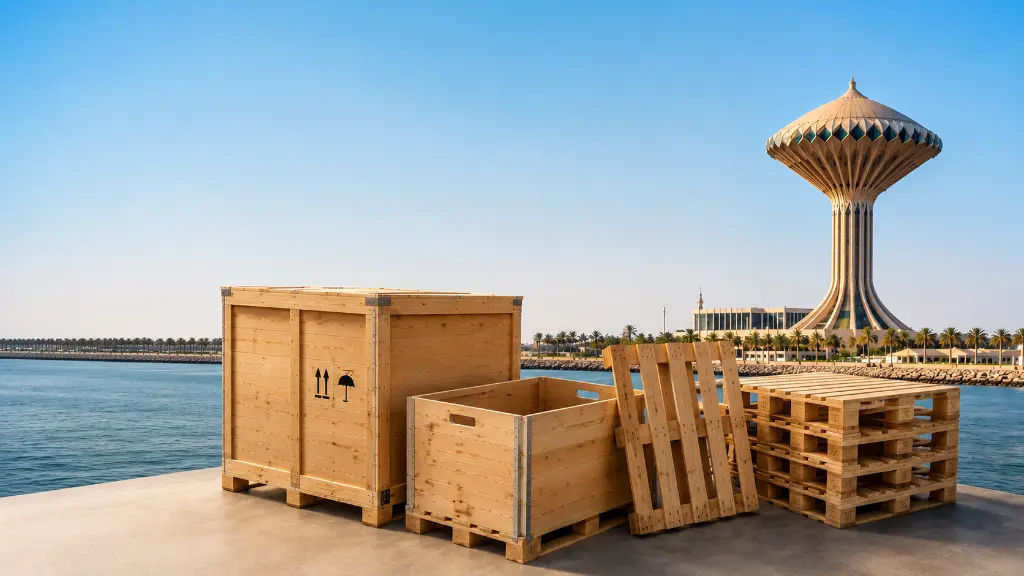
These are open slatted and reinforced crate systems. These are used for heavier industrial equipment like compressors, pumps, fabrication units, and oilfield machinery. The idea here is balance, enough structure to protect the load, but not so much enclosure that weight and moisture become a problem.
Grade-A Used & Reconditioned Stock
Timber platforms that have already been used in logistics cycles but are brought back into service after inspection and reinforcement. These are usually chosen for repeat shipments. These are mainly used where cargo conditions are already known. They help reduce cost without compromising basic handling safety.z
Technical Material Engineering & Cross Border Transit Matrix
Khobar Logistics Focus | Recommended Lumber Selection | Core Technical Advantage | Target Border & Site Compliance |
Cross-Border GCC Transport | Kiln-Dried SPF / Dense Hardwoods | Controlled dimensional stability (±2mm range) | ISPM-15 export compliance ready |
Corporate Fleet Staging | Seasoned / Multi-Cycle Softwood | Holds shape under repeated handling | Stable domestic distribution flow |
Heavy Equipment Moves | High-Density Hardwood Blocks | Strong resistance under compression loads | Accepted under Aramco 8020-00 handling standards |
ISPM-15 Compliance & Core Thermal Sequence
For anything leaving Saudi Arabia or moving through GCC cross-border routes, ISPM-15 compliance is a basic requirement—not an option.
All timber used in export packaging is kiln-treated under controlled conditions until the core reaches 56°C for at least 30 minutes. This is done to eliminate any biological risk in the wood before it enters international movement.
Once treatment is complete, the material is stamped with the IPPC mark and backed with full heat-treatment records. These documents are what customs authorities and inspection teams rely on if anything needs to be verified.
The point of this process is simple: when cargo arrives at a checkpoint, packaging should not be the reason it stops.
Corporate RFQ & Volume Contract Intake Matrix
Most procurement teams in Khobar are not buying packaging as a one-off requirement. They are planning for ongoing shipments, multiple sites, and repeat project cycles. That is why RFQ details need to reflect how the operation actually runs.
- Corporate Procurement Profile:
- Name
- Title
- Company
- and Supply Chain Sector (e.g., EPC Contracting, Chemical Logistics, Marine Freight).
- Deployment Scale:
- Single Project Batch
- Ongoing Monthly Allocation
- Multi-Site Corporate Volume Contract.
- Configuration Requirement:
- Standard Euro ISO Pallets
- Custom Solid Wall Boxes
- Heavy Timber Skids and Dunnage.
- Primary Distribution Footprint:
- Cross Border GCC Lanes
- Domestic Eastern Province Movement
- International Port Export.
Each request is treated based on how the cargo moves in real conditions, frequency, handling points, and route exposure, so the packaging matches the operation, not just the dimensions.
Request Export-Ready Certified Crating Pricing
Khobar Technical Logistics FAQs
How do your packaging configurations streamline customs clearance on the King Fahd Causeway?
This is done by making sure everything is already compliant before shipment. Compliance factors are correct ISPM-15 treatment and proper marking. Complete documentation is also an important factor. This is done so there are no surprises during inspection.
Can we secure a single vendor-managed inventory (VMI) contract covering both Khobar offices and Jubail/Dammam yards?
Yes. VMI setup an be coordinated across multiple Eastern Province locations. This is done with centralized control and scheduled replenishment based on usage.
What dimensional tolerances are enforced on custom timber boxes designed for precision corporate asset relocation?
Standard engineered crates are built within ±2mm tolerance. So they fit properly with handling equipment and lifting systems. They should also have compliance with warehouse loading setups without adjustment on-site.